
Better Factory Solutions
28 September 2026
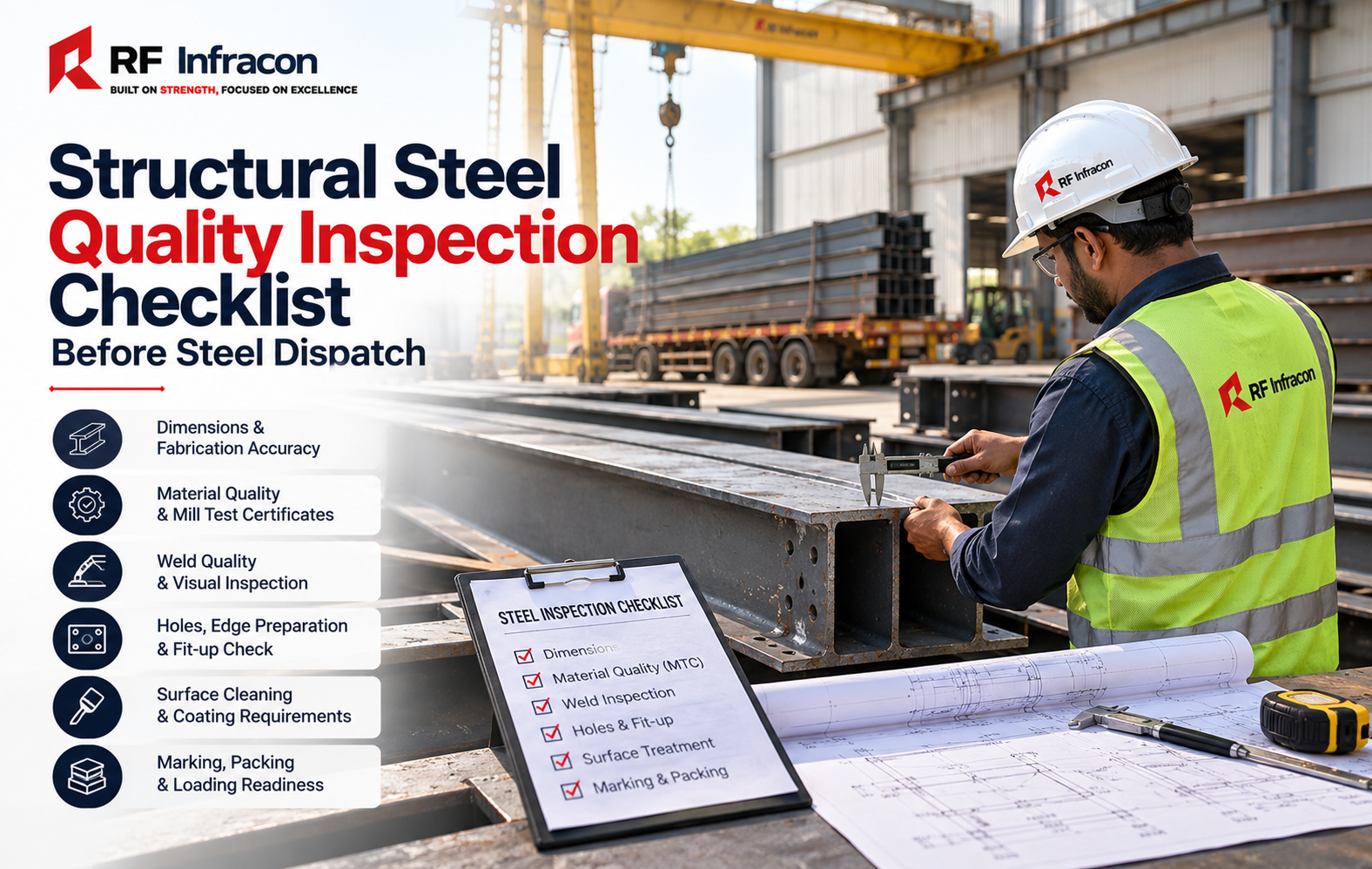
In industrial construction, steel dispatch is not just a transportation activity. It is a critical approval stage where the fabrication quality of your entire structure is verified before it reaches the site.
A mistake identified after erection begins can create serious problems. A wrong connection plate, incorrect member size, welding issue, missing component, or poor surface preparation may delay installation and increase project costs.
For projects like PEB buildings, industrial sheds, steel warehouses, and factory structures, quality inspection before dispatch ensures that fabricated components are ready for smooth site execution.
A professional steel structure fabrication company does not consider dispatch as the final step of fabrication. It is the final quality checkpoint before the structure moves from controlled factory conditions to the actual project site.
A large industrial structure may contain hundreds or thousands of fabricated components.
Columns, rafters, beams, bracing members, connection plates, and secondary steel components are manufactured separately and assembled at the site according to approved drawings.
If even one major component has dimensional or fabrication issues, the impact is not limited to that single part. It can affect erection sequence, crane planning, workforce utilisation, and project timelines.
This is why experienced structural steel fabricators maintain a quality inspection process before loading material for transportation.
The objective is simple:
The steel arriving at the site should be ready for installation without unexpected fabrication corrections.
The inspection process starts with verifying whether the fabricated structure matches the approved engineering requirements.
For every industrial project, the fabrication team should confirm that the final output matches:
Approved structural drawings
Material specifications
Fabrication drawings
Connection details
Project requirements
For a PEB structure manufacturer, this coordination becomes even more important because pre-engineered buildings are manufactured through detailed design calculations and controlled fabrication processes.
The fabrication team, engineering team, and project team must work together to ensure that the final components are manufactured exactly as required.
Before fabrication begins, the quality of raw steel determines the reliability of the final structure.
Steel sections, plates, and other materials should be verified according to project specifications.
Important checks include:
Steel grade confirmation
Thickness verification
Section size checking
Material test certificate verification
For industrial applications such as manufacturing sheds, warehouses, and heavy structures, using the correct material specification is essential because the structure is designed according to specific loading conditions.
A reliable steel structure manufacturer maintains proper material traceability from procurement to final dispatch.
One of the most important checks before dispatch is dimensional verification.
Fabricated members should match approved drawings in terms of:
Length
Width
Hole position
Connection location
Member alignment
During site erection, steel components are assembled as planned. If dimensions do not match, the erection team may require modifications at the site.
For large projects such as a steel structure warehouse, factory shed, or PEB building, these small errors can affect the complete installation schedule.
Accurate fabrication reduces site dependency and improves erection efficiency.
Welding quality directly influences the strength and durability of fabricated steel components.
A proper welding inspection checks whether joints are manufactured according to approved procedures.
The inspection generally focuses on:
Weld appearance
Weld size
Joint quality
Welding defects
Repair requirements
For industrial structures, welding is not only about joining two steel members. It ensures that the complete structure performs safely under operational loads.
Companies involved in PEB fabrication and industrial shed fabrication follow controlled welding practices to maintain consistency across large projects.
Steel structures depend heavily on accurate connections.
Before dispatch, fabrication teams verify that:
Connection plates are correctly manufactured
Bolt holes match approved drawings
Required accessories are available
Components are properly identified
This becomes important during site erection because missing or incorrect connection components can stop installation work.
For businesses constructing factories, warehouses, and industrial buildings, proper pre-dispatch verification reduces avoidable site delays.
Industrial steel structures are exposed to different environmental conditions after installation.
Depending on the project requirement, fabricated steel may require specific surface preparation and protective coating systems.
Inspection includes:
Surface cleaning
Paint quality
Coating thickness
Rust protection
Projects located in industrial environments such as Gujarat manufacturing zones require proper protection because structures may face humidity, dust, chemicals, or weather exposure.
A good fabrication process considers long-term durability, not only initial installation.
Quality is not only about physical inspection. Documentation provides proof that the fabrication process followed required standards.
Before dispatch, project owners should verify important records such as:
Material certificates
Inspection reports
Fabrication drawings
Welding records
Coating reports
Dispatch checklist
For large industrial projects, these documents help maintain project transparency and support future maintenance requirements.
Many companies compare fabrication partners mainly based on quotation value. However, steel fabrication quality depends on capability, not only pricing.
Before selecting a fabrication company, buyers should understand:
Does the company have experience with industrial projects?
Can they handle PEB and heavy steel structures?
Do they maintain quality inspection records?
Do they have engineering and fabrication coordination?
Can they support erection and project execution?
A company experienced in steel structure fabrication, PEB buildings, and industrial construction can provide better control over the complete project lifecycle.
PEB projects require close coordination between design, fabrication, and erection.
Unlike conventional construction, components of a pre-engineered building are manufactured based on specific engineering calculations.
Therefore, PEB quality control focuses on ensuring:
Fabricated members match design requirements
Components are properly identified
Connections are accurate
Material quality is maintained
Dispatch sequence supports erection
This approach helps industries achieve faster installation and better structural reliability.
Ridhish Factory Infracon provides structural steel fabrication, PEB fabrication, industrial shed construction, and turnkey industrial solutions across Gujarat.
Our fabrication approach focuses on engineering accuracy, controlled manufacturing processes, inspection discipline, and project coordination.
From steel processing to final dispatch, every stage requires attention because the quality of fabricated components directly impacts site execution.
Whether you are developing a factory shed, warehouse, PEB building, or customized industrial structure, RF Infra supports projects with practical fabrication solutions.
Before finalizing your steel fabrication partner, understanding their quality inspection process can help avoid costly project issues later.
Connect with RF Infra to discuss your fabrication requirements and quality expectations.
Request Steel Fabrication Consultation
A steel structure is only as reliable as the process behind its manufacturing.
Proper inspection before dispatch ensures that the fabricated structure reaches the site ready for installation, reducing delays and improving project confidence.
For industrial sheds, warehouses, PEB buildings, and large steel structures, selecting a fabrication partner with a strong quality control process is one of the most important decisions before construction begins.
