
Better Factory Solutions
11 July 2026
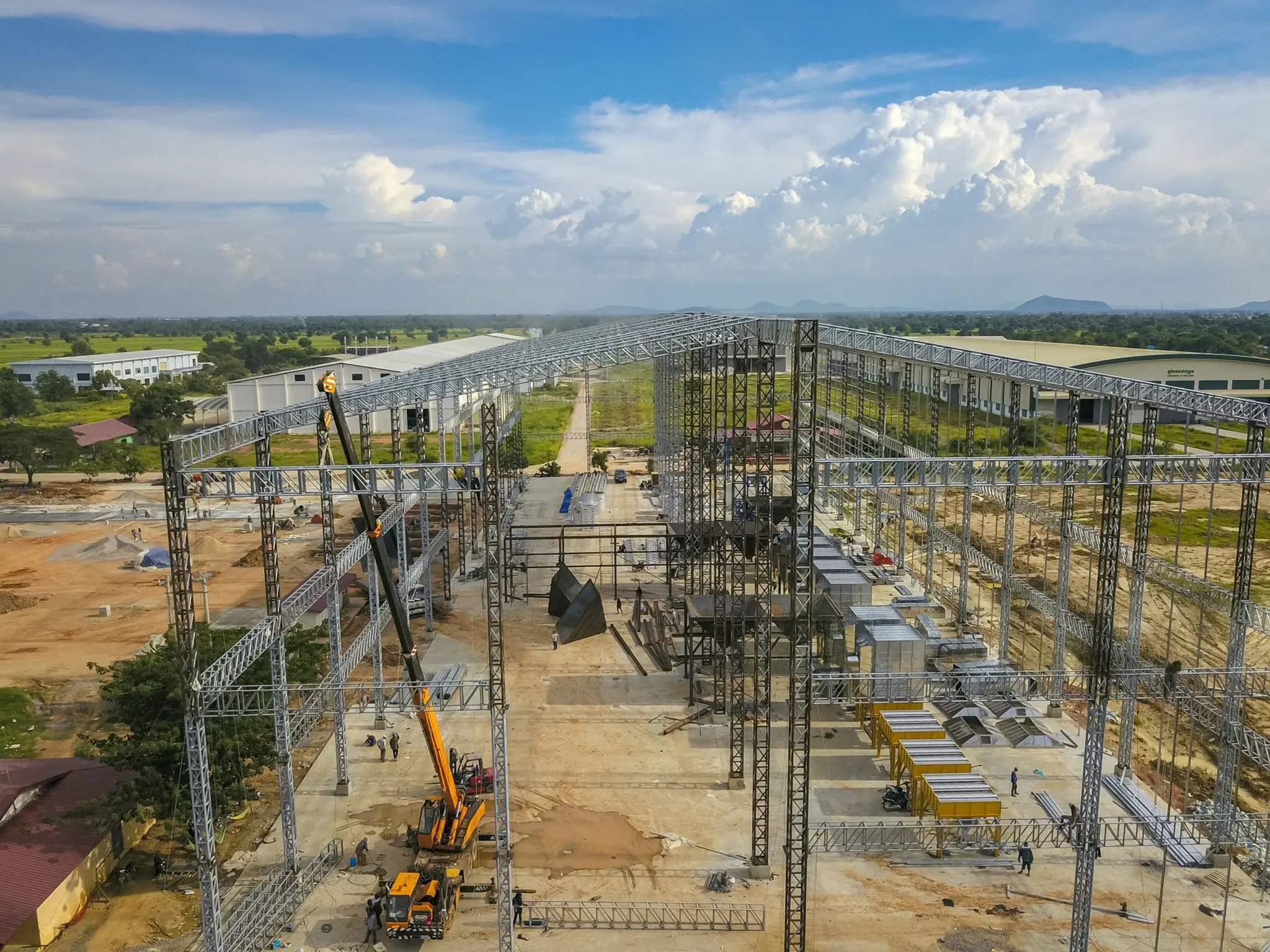

Building a manufacturing facility or commercial shed is one of the largest investments for any manufacturing business. Whether you are putting in a warehouse, manufacturing unit, or logistics facility, the method you pick out for creation can significantly impact your PEB factory construction cost, timelines, and operational performance.
Two foremost fashions dominate the marketplace: turnkey factory construction and attracting multiple contractors for distinctive components of the mission. While both have their blessings, understanding which model reduces danger is important for industrial owners aiming for long-term performance and value-effectiveness.
Turnkey factory construction is a single-source model wherein one organization manages the whole assignment from layout and engineering to fabrication, production, and handover. In contrast, the multiple contractor technique includes hiring separate contractors for civil work, PEB shape, roofing, utilities, and completing.
While multiple contractors can sometimes appear inexpensive on paper, it frequently increases complexity, coordination challenges, and risk. Conversely, turnkey creation gives integrated management, ensuring smoother mission execution.
When a single contractor manages the complete manufacturing unit venture, the chance of miscommunication, schedule delays, and layout conflicts is notably decreased. This is particularly important for PEB building contractors due to the fact that pre-engineered homes require specific integration of metallic fabrication, structural design, and erection.
In a turnkey version, business owners benefit from:
Integrated design and execution: The equal team manages engineering, fabrication, and location erection, ensuring consistency and minimizing mistakes.
Simplified duty: Responsibility for delays or high-quality troubles lies with a single entity, lowering disputes.
Faster assignment crowning glory: Coordinated timelines keep away from downtime among contractors and accelerate task handover.
For industrial owners in Ahmedabad, Sanand, Bavla, or Vatva, turnkey fashions regularly help control industrial constructing production price at the same time as reducing unexpected dangers.
Hiring separate contractors can seem attractive for budget motives or for leveraging specialised understanding. However, this version introduces numerous demanding situations:
Coordination Complexity: Multiple contractors want to talk effectively. Misalignment in schedules or design assumptions can lead to delays.
Responsibility Gaps: When troubles arise, duty can become uncertain, often leading to disputes and project delays.
Higher Hidden Costs: Integration errors, rework, or modifications in design assumptions can increase manufacturing facility shed costs beyond preliminary quotations.
Quality Variability: Different contractors might also observe exceptional standards, affecting the overall sturdiness and toughness of the shape.
While a few massive commercial owners may additionally have in-house assignment managers to coordinate multiple contractors, smaller producers regularly find turnkey production more secure and greener.
RF Infra specializes in turnkey PEB factory construction answers throughout Gujarat. By coping with layout, fabrication, erection, and finishing under one roof, RF Infra minimizes hazards and ensures superb business homes.
Key advantages consist of:
Accurate PEB structure cost per kg and per sq ft calculations
Transparent challenge timelines with predictable completion
Integrated great control at some point of fabrication and erection
Future-ready layout for expansions or operational upgrades
With a long time of experience in Ahmedabad, Sanand, Bavla, and surrounding business zones, RF Infra gives industrial owners dependable, risk-mitigated solutions that optimize industrial construction cost and long-term operational efficiency.
For industrial proprietors evaluating whether or not to go with a turnkey solution or hire a couple of contractors, the choice frequently boils down to risk tolerance and operational necessities.
If you prioritize predictable timelines, single-point accountability, and reduced hidden costs, turnkey construction is the safer choice.
If your team has strong challenge control abilities and you can coordinate a couple of contractors effectively, the multi-contractor version can work, but requires more oversight.
For maximum producers, especially those making an investment in PEB manufacturing facility construction, the turnkey approach reduces risk, guarantees steady first-class, and optimizes long-term costs.
While both turnkey manufacturing facility production and multiple contractor fashions have their area, the turnkey technique constantly proves to be more secure, quicker, and more efficient, especially for PEB structures, warehouses, and industrial sheds.
Partnering with a dependable PEB building contractor like RF Infra ensures your undertaking is completed on time, within budget, and with minimal operational risk. With turnkey execution, commercial proprietors can focus on production and commercial enterprise growth as opposed to creation coordination challenges.
What is turnkey manufacturing facility construction?
It is a single-source creation model wherein one contractor handles layout, fabrication, erection, and finishing of a business construction.
Why is turnkey production more secure than hiring multiple contractors?
It reduces coordination-demanding situations, simplifies responsibility, and minimizes hidden expenses because of layout conflicts or transformation.
Does turnkey construction lessen PEB factory production value?
While initial prices may also appear similar, turnkey production reduces unexpected prices, delays, and issues, often saving money in the long run.
Can more than one contractor be used for warehouse initiatives?
Yes, however, it will increase coordination threat and calls for sturdy task management to avoid timetable delays and price escalation.
Why pick RF Infra for turnkey PEB factory creation?
RF Infra affords integrated layout, fabrication, and erection with engineering-led pleasant control, minimizing risk and ensuring cost-effective, long-lasting industrial systems.
